

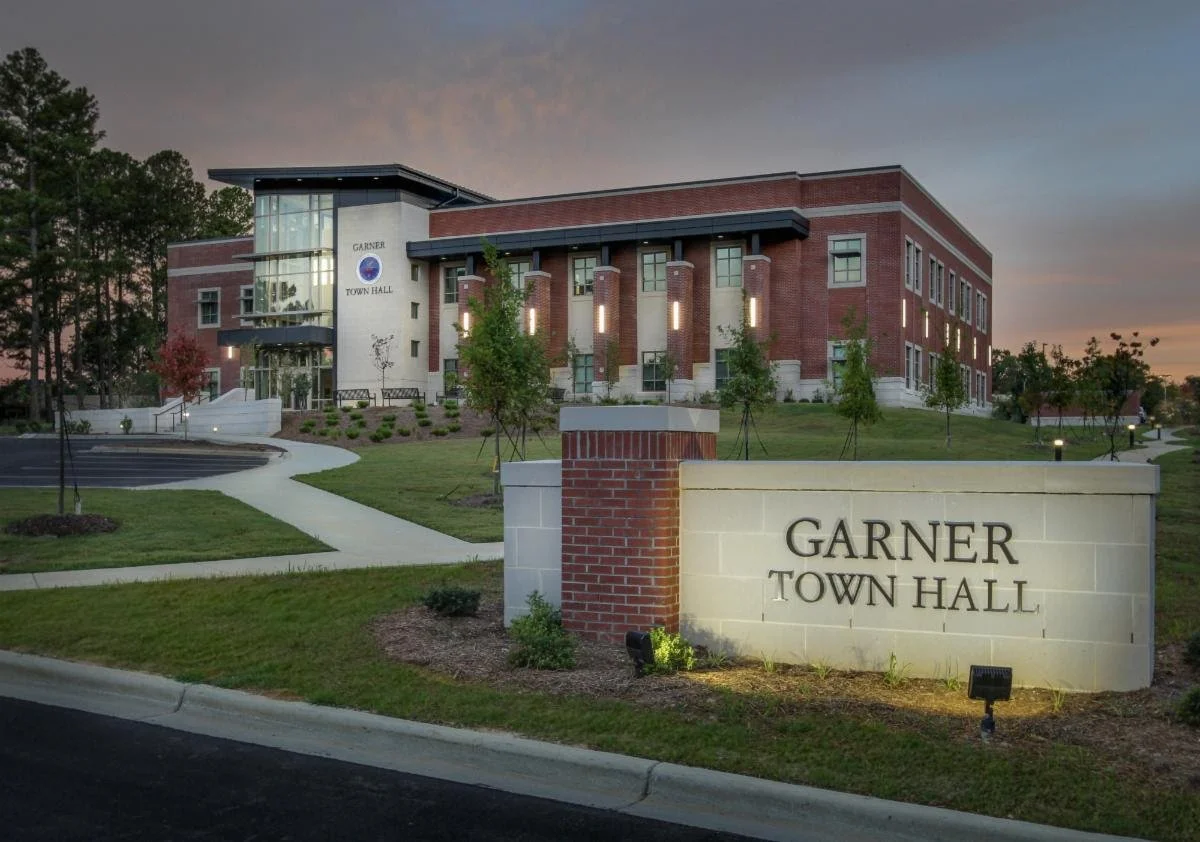
The Garner Town Council in May 2026 unanimously passed a temporary moratorium on the permitting and issuance of development approvals for data centers, data-processing facilities, crypto currency mining operations and other similar land uses.
The moratorium remains in effect until May 18, 2027, or until the Council approves Unified Development Ordinance amendments regulating data centers and other similar uses (whichever occurs first).
Here are next steps
The Planning Department will continue studying the impacts data centers could have on Garner and compiling information about how other communities have sought to mitigate potential negative impacts through zoning regulation. This phase should wrap up by mid-fall.
A subsequent phase will involve drafting UDO text amendments related to data centers and similar land uses. These proposed amendments then would be presented to Council for consideration.
Current Status and Legal Context
A memorandum from the Town of Garner Planning Department proposes a temporary development moratorium on data centers, cryptocurrency mining operations, and similar uses to allow the town time to study their impacts and develop specific zoning regulations.
Existing Gap: The Town of Garner currently has no specific definitions or standards for data centers or crypto-mining operations. Under the current Unified Development Ordinance (UDO), they likely fall under broader industrial or flex space uses and could be allowed by right in Light Industrial (LI) or Heavy Industrial (HI) zoning districts.
Precedent & Authority: Nearby jurisdictions (such as Apex, Wendell, and Chatham County) have enacted similar moratoria. North Carolina General Statute § 160D-107 grants Garner the authority to impose a temporary development moratorium provided specific statutory requirements and public hearing notices are met.
Key Concerns Driving the Moratorium
Energy Consumption: The massive power demand from AI and data infrastructure strains energy supplies, requiring significant offsite power generation.
Water Usage: Large facilities—particularly hyperscale facilities using 1 to 5 million gallons of water daily—can strain local public water and wastewater capacity and risk lowering local water tables.
Environmental & Health Risks: Potential greenhouse gas emissions, leaks from stored coolants/fuels/battery backups, and risks of microbiological contaminants (like Legionella) in open-loop cooling systems.
Low-Frequency Noise: Continuous noise from outdoor cooling towers, chillers, and backup generators often falls in low frequencies not adequately covered by existing UDO industrial noise standards.
Land Use & Design: Unresolved requirements for setbacks, screening, architectural standards, and decommissioning plans.
Proposed Duration and Action Plan
Term: Proposed for one year (May 19, 2026, through May 18, 2027), or until a zoning text amendment establishing specific rules is adopted—whichever occurs first.
Months 1–6: Research the impacts of these facilities and analyze how other communities have addressed them via zoning.
Months 6–12: Draft and propose UDO text amendments, allowing at least 3 to 4 months to complete the formal review process (public hearings, Planning Commission recommendation, and Town Council action).
Staff Recommendation
The Planning Department recommends that Town Council adopt the proposed moratorium ordinance and direct staff to research and develop a package of Garner-specific UDO text amendments to regulate these facilities.
